
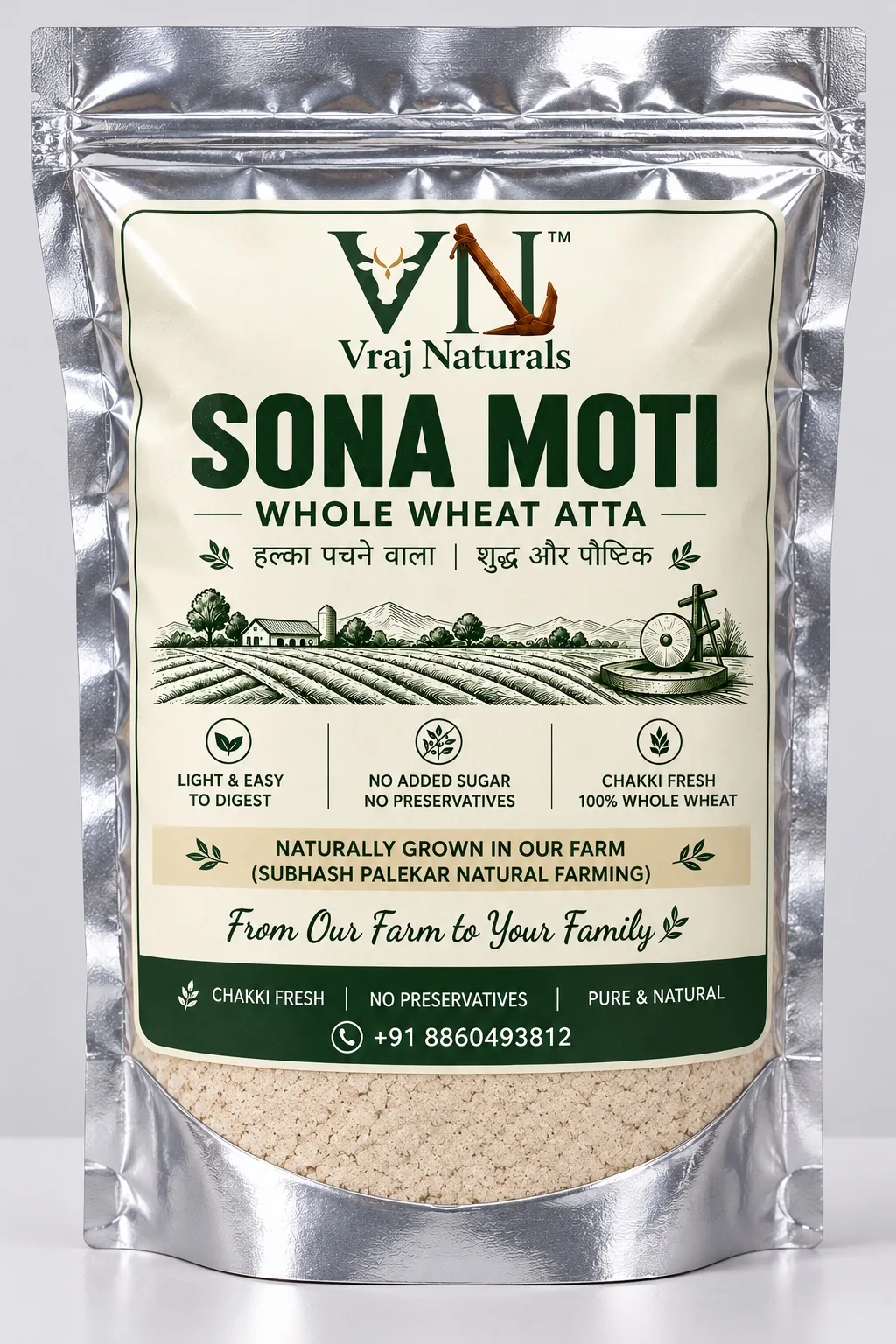
Sona Moti is a name used for a traditional wheat variety and for flour made from it. As with other grain names, the product name alone does not tell you where a particular batch was grown, how it was milled, or how it will behave in your kitchen. Those details depend on the producer and the product.
Start with the grain and its source
When choosing Sona Moti wheat or atta, look for clear product information: the grain or flour name, net weight, ingredients, packing details, and a way to contact the seller. If origin or milling method matters to you, ask the seller directly. A transparent answer is more useful than a broad promise on a label.
Whole grain and flour are different forms
Whole wheat kernels need to be cleaned and prepared before cooking. Atta is flour produced by milling wheat. The fineness of the flour and the way it is milled can affect how much water a dough takes and how it feels when kneaded. A new flour may need a small adjustment to your usual water amount or resting time.
Ways to use Sona Moti Atta
Use it in familiar recipes such as roti, paratha, or other wheat-based flatbreads. For your first batch, make a small dough and add water gradually. Resting the dough before rolling can make it easier to work with; the ideal method depends on the flour and your recipe.
Choose with useful information
Traditional grain names can connect us to regional food cultures, but they should be supported by accurate product details. Compare ingredient and sourcing information, store the flour carefully, and choose the product that fits your own cooking and preferences. No single grain or flour is automatically the right choice for everyone.